Black People Cannot Be Racist, Students Told

Pupils in several Sheffield schools have indeed been taught that Black people “cannot be racist” towards white peers, according to multiple UK news reports published on 17–18 May 2026.

A cluster of Sheffield schools introduced anti‑racism lesson programs teaching that racism needs structural or cultural influence, and thus Black prejudice toward white people is “not racism”. This sparked a political backlash, with critics calling it indoctrination and supporters framing it as teaching structural racism.

Pupils aged 7- 11 were told that white people in Britain were likely to be privileged because they are less likely to encounter racist behaviour, and older pupils were taught that Black people can hold prejudice, but racism = prejudice + power, and only groups with cultural power (defined as white people) can be racist.

The lessons were devised by a Sheffield teaching school alliance led by Notre Dame High School, a government-designated national teaching school.

However, this enables divisive identity politics. Presents contested ideas like white privilege as reality and enables children to consider themselves primarily through race, but the schools said they teach it because the alliance sought to empower students to question unequal systems and to deliver a first step towards anti-racist teaching.

Evidently, research indicates that Black pupils in England frequently encounter extreme discipline, linguistic prejudice and a sense of being policed, or they feel unsafe in the school environment.

These are crazy times that we are living in because now all ‘white kids’ are going to be made to feel shamed, but we are not accountable for what people did in the past; that does not mean that we should not learn about it as part of our history, and British kids have far better things to do than worry about another race’s feelings of inadequacy.

Why should we feel any guilt about what some people did 200 years ago? They’re all dead anyway. What we should be concerned about is what is going on today or the day before, but race and history have become chaotic and polarised. Now there are genuine endeavours to modernise history education, yet all of this gets spun into a culture war.

If you want to disempower a generation of children, you teach them that their identity is something done to them, not something they can shape, and that cuts across race, class, disability, gender, and everything, but the deeper point is this – pointing out differences isn’t the issue, weaponising them is by turning them into fear, guilt or a form of competition.

Parents definitely have a role in helping their children to think critically, but framing it as protecting them from ‘wokists’ oversimplifies what’s actually going on and risks substituting one form of dogma with another. The goal is accurate information and evidence, not ideology.

Isn’t all of this simply creating more of a racial divide? It feels like it, doesn’t it? Because whenever an issue touches race, identity, or inequality, public discussion gets more audible, more penetrating, and more polarised, but reacting to these debates frequently strengthens division; those underlying anxieties were already there, they’re just being yanked into the open more.

Any individual, of any skin colour or ethnic background, can hold racist views or act in racist ways. Racism isn’t biologically tied to one group; it’s a collection of behaviours, prejudices, and power dynamics that any person can partake in.

Some people might say that our education system has been lying to our children for years now. It’s not been lying, it’s been avoiding, minimising, and deflecting because acknowledging children’s needs commands money, training, and accountability, and that’s not a lie, it’s a structural incentive problem.

So, are black people racist against white people? The short answer is yes – individual Black people can be racist towards white people because the law defines racism as any racially inspired hatred, regardless of who targets whom. However, some schools and activists use a distinct, structural definition that says racism requires power, which is why we are seeing claims that ‘Black people can’t be racist to white people.’ These claims are ideological, not legal.

Tommy Robinson – “Stop Islam”

Far-right activist Tommy Robinson has said he would ‘stop Islam’ if he ever became prime minister.

Speaking at Saturday’s far-right anti-Islam march, the organiser, whose actual name is Stephen Yaxley-Lennon, said it was time for ‘Muslims to leave this country’ and vowed to stop Islam if he ever came to power.

Of course, Tommy Robinson is never going to become prime minister because in the UK, you have to be an MP (elected to the House of Commons) and be the leader of a party that can control a majority in the Commons.

However, in the abstract, he could stand for election, win a seat, lead a party, and control a majority, but that’s where the visionary possibility concludes.

For Tommy Robinson to become prime minister, all of the following would need to happen. He would have to win a parliamentary seat. He would need to become a leader of a major party or build a new one. That party would need to win a general election, and he would need to command the confidence of the House of Commons.

Each of those steps is exceedingly far-fetched, and all four together are virtually unattainable.

Some figures with extreme or fringe politics achieve traction in public debate, but not in electoral politics, and in the UK, the gap between online influence and actual political power is immense.

Tommy Robinson might be effective in particular online spaces, but that doesn’t translate into institutional power.

Tommy Robinson’s comments at the weekend were clearly incendiary, but he’s only voicing what many people are feeling; he’s got the guts to say it.

For many years now, Tommy Robinson has framed Islam as a civilisational threat.

Islam as a religion is not a ‘civilisational threat’ to the UK, but this needs to be unloaded appropriately, and Islam, the religion, is not deemed a threat by MI5, the Home Office or any major security body. However, Islamist extremism, which is a political ideology, is deemed a threat, and of course, there are concerns about immigration, identity, and cohesion.

Of course, not all Muslims are terrorists, but unfortunately, the whole area gets obscured by rhetoric.

The majority of Muslims in the UK and globally are just regular people living regular lives, with no connection to violence or extremism.

Violent extremist groups like ISIS, Al-Qaeda, Boko Haram, et cetera, are the ones that are responsible for this enormous harm and human rights violations. Still, they represent only a tiny fraction of the world’s 1.9 billion Muslims.

Of course, like in every country, the UK has a small number of individuals who hold extremist views, but they’re a tiny minority. However, minority or not, they are still very dangerous, and they are indoctrinated, but not in a way the internet often frames it, but they do indeed target people for indoctrination, recruitment, and radicalisation, and they target whoever they believe they can exploit.

The indoctrination doesn’t depend on race; it depends on susceptibility, and the recruiters look for people who feel alienated or angry. People who feel humiliated or vulnerable. People who want to belong or have uniqueness. People who are socially secluded, and people who are already consuming polarising content, and colleges and universities are a good hunting ground for this.

Then there is online radicalisation, making targets even easier. White teenagers in the UK, US, and Europe become primary targets for far-right propaganda, because they’re heavily online and often politically naive.

Sadly, politicians often frame extremism as something ‘done by’ one group or another, but in reality, extremism is a method, not an ethnicity, and any group that uses violence for political ends will recruit whoever they can.


‘My 6-Year-Old Son Is Still In Nappies – Louise Thompson Has Hurt 100s Of Mums Like Me’

Louise Thompson’s remarks about children starting school still in nappies triggered a significant backlash from mothers — especially those whose children have medical needs, developmental delays, or disabilities.

The core problem is that numerous parents felt her comments obliterated the complicated truths behind delayed toileting and unfairly blamed mothers for “lazy parenting.”

On her He Said, She Said podcast, Thompson laughed while discussing statistics showing that one in four children in England start school before being fully potty trained. She suggested parents might be “too distracted,” “taking the easy route,” or “not dedicating the time.” Her fiancé, Ryan Libbey, added that some parents are “career‑hungry,” suggesting ambition leads to neglect.

A clip of the discussion was subsequently removed, and Thompson gave an apology — but numerous parents said it was insufficient.

Parents across social media described her comments as dismissive of children with SEND, including autism, ADHD, developmental delays, sensory processing issues, and medical conditions that directly affect toileting. Ignorant of NHS delays because many families wait years for assessments, continence support, or occupational therapy.

Stigmatising, such as implying poor parenting when the reality is often medical, neurological, or trauma-related.

Emotionally harmful – parents describe how they feel judged, shamed, and erased. One mother said, ‘Imagine seeing your child struggle and being told you took the easy route.’

Experts highlighted that toileting delays are not a simple matter of parental effort. For numerous families, toileting is a complicated developmental milestone, not a moral failing.

So, why does this story resonate with so many mums? Because it wasn’t just about nappies, it was about judgment, ignorance and the erasure of lived experience, especially for mothers of disabled and neurodivergent children.

Parents said the laughter was the most painful part. It signalled ridicule rather than understanding, it reinforced stigma that already isolates families, and it ignored the emotional labour of caring for a child with additional needs.

One SEND parent summed it up, ‘Children with special needs deserve dignity, understanding, and compassion, not public ridicule.’

The thing is, not all children are the same. Some children with special needs can be potty trained quite easily; others cannot, and it takes a little longer, which is extremely stressful for the parent. The more frustrated the parent becomes, the more frustrated the child becomes, but we shouldn’t underestimate these children, because some of them can be extremely intelligent.

Regardless of who Louise Thompson was referring to regarding toilet training, these influencer podcasters need to do extensive research before addressing this problem.

My own son has autism, and I did manage to get him out of nappies by the age of three years old, and if someone had said something like this to me, it wouldn’t have hurt my feelings. I would have just thought, ‘They really don’t have a clue,’ and then I would have carried on my day.

Do parents intentionally not potty train their children? No, parents don’t ‘deliberately’ avoid potty training their children, but some children cannot toilet train on a specific timeline, and some families encounter obstacles that outsiders don’t see.

The notion that parents are choosing not to toilet train is a myth, usually rooted in a misunderstanding of child development, SEND needs, and the realities of modern family life.

Forcing potty training is one of the quickest ways to create long‑term toileting problems, especially for SEND children, because if you push before a child is developmentally ready, you don’t speed things up; you slow them down.

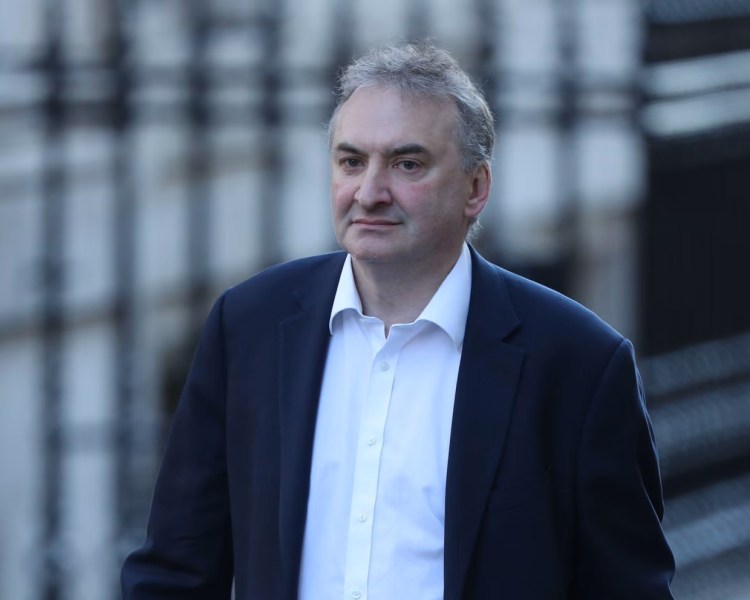
Inside The Life Of Wes Streeting, From Mum Born In Jail To Fixing The NHS

Wes Streeting’s life story is unusually stark for a senior British politician: a childhood shaped by deprivation, criminality, and even a mother born in prison, followed by a rapid climb to the top of government and a central role in attempts to improve the NHS.

Streeting grew up in a council flat in London’s East End, born in 1983 to teenage parents who struggled financially. His family background was drenched in criminality and instability. His maternal grandfather, Bill Crowley, was a career criminal and armed robber known to the Krays.

Libby Crowley, his grandmother, was incarcerated in Holloway and even shared a cell with Christine Keeler. His mother, Corinna, was born in prison, something that Streeting has candidly discussed, and as a child, he made primary-school prison visits to see his grandfather. It was these experiences that shaped his views on law, order, and social justice.

Despite a tumultuous start, Streeting’s academic ability was spotted early, and with teacher support, he attended a Sutton Trust summer school and subsequently won a place to study history at Selwyn College, Cambridge. He became president of the Cambridge Students’ Union and later the National Union of Students.

Streeting came out as gay at university, describing it as liberating at Cambridge but frightening at home.

Before joining Parliament, he worked in the nonprofit sector, concentrating on education and inequality with organisations including Stonewall and the Helena Kennedy Foundation.

In 2010, he was elected as a Labour councillor. In 2015, he became MP for Ilford North. He served in multiple shadow roles before becoming Secretary of State for Health and Social Care in 2024, known for his direct communication style and readiness to criticise both the left and right of his party. By 2026, he emerged as a frontrunner to succeed Keir Starmer as Labour leader.

As Health Secretary, Streeting positioned himself as a reformer determined to ‘fix the NHS,’ drawing on his own experiences of poverty and reliance on public services. His approach included confronting long waiting lists and workforce shortages. Pushing for modernisation and accountability, and arguing that he is a ‘product of what happens when the state does things right,’ emphasising the role of public services in lifting families out of hardship.

Wes Streeting could be a capable prime minister in some respects, particularly in communication, strategic clarity, and the willingness to take political risks, but whether he would be a good prime minister depends on what one values in leadership.

Streeting is widely viewed as one of the strongest communicators and a highly effective political operator. He has never concealed his ambition and has been preparing for leadership for years.

He is known for being a ‘window-breaker’ rather than a careful manager, and he is someone who pushes change rather than glossing things over.

So, would he be a good Prime Minister? It depends on what you believe the UK needs, but his insight into ‘everyday people’ is something that the UK needs. The problem is that once they get into power, that power goes to their heads, and they end up being like any other prime minister before.

What I like about Streeting is that he has succeeded on his merits, and that’s what matters, regardless of his family background.

Would I vote for him? – No, because I would never vote for Labour, not now, not anytime in the future, because Starmer has tarnished the party from the inside out, and I don’t believe that many people will trust Labour again.

Bomb Found At Base Of Dam Holding City’s Drinking Water

At the base of a dam in Alabama that provides drinking water to the City of Mobile and the surrounding area, an explosive was found underwater.

The explosive was found on Wednesday by divers employed by the Mobile Area Water and Sewer System (MAWSS), who were surveying the Converse Reservoir dam in Mobile County for routine maintenance and repairs. 

The divers immediately reported the device, which MAWSS described as ‘a grenade-type IED (improvised explosive device).’

After notifying the Mobile County Sheriff’s Office, a massive multi-agency reaction involving federal partners took place.

Those agencies included the Mobile County Sheriff’s Office, FBI Bomb Squad, Mobile Police Department Explosive Ordnance Detail, ALEA Bomb Squad and the Daphne Search and Rescue Team.

The explosive was recovered and safely discharged on land away from the dam. No one was injured. 

‘Our top priority is keeping your drinking water safe,’ said MAWSS Director Bud McCrory in a public statement. 

‘This is an unprecedented threat, and we are fortunate that this device was discovered before it could cause serious damage to our water supply or harm to individuals,’ he continued.

‘We are grateful for the professionalism and competency of our law enforcement partners – as well as the quick thinking of our contractors and divers – in identifying this device and safely destroying it,’ McCrory concluded. 

The event was reported to the Department of Homeland Security because the Converse Reservoir dam and the water supply it contains in Big Creek Lake are classified as vital infrastructure by the federal government.

MAWSS promised to ‘work with relevant law enforcement agencies to enhance security at the reservoir and dam.’

It is unclear how the explosive made it to the bottom of the dam, but bomb experts told 1819News that the device was likely purposely built and placed there. 

MAWSS has not named a suspect for who may be responsible.

Monica Allen, the public relations manager for the agency, told 1819News that there are cameras around the dam to monitor activity. 

She added that she is thankful no one was hurt because ‘our staff is on that dam, if not daily, every other day.’

‘And there are homes in that area, so you just don’t know. We live in a different kind of world now,’ Allen added.

The Converse Reservoir dam was built in 1952 and holds 17 billion gallons of water, supplying the City of Mobile and its surrounding area with drinkable water, according to MAWSS, which manages the infrastructure. 

The agency owns 9,000 acres of land surrounding the reservoir to act as a buffer to encroaching development and protect the critical drinking water supply.

The experts said the bomb was likely purposely built and placed there. Well, this adds gravity while stating the most forehead-slapping obvious thing imaginable.

A custom explosive device… …found at the base of a dam… …in a location that requires deliberate access… …and they think it was purposely put there? Groundbreaking deduction, Watson!

However, there are things like how someone accessed the submerged structure that would require a boat, diving gear, or inside access. Was it positioned recently or long ago? Because explosives underwater degrade differently depending on the type.

Was it a functional device or a decoy? Bomb squads frequently find improvised devices that are meant to be found.

Was there any surveillance, access logs, or maintainance records? Because dams are critical infrastructure – they’re supposed to be layered in security.

This was a good way to pad an article without supplying actual investigation details, and it was reported like a revelation, when it’s actually just… fluff.

So, what types of explosives can survive underwater? Quite a lot, but not in the Hollywood ‘blow up a dam with a grenade’ sense.

What actually survives underwater? Well, explosives that can function underwater tend to fall into three categories.

Military‑grade underwater explosives are designed for naval mines, demolition charges, and depth charges. These use waterproof casings and detonators that function under pressure.

Commercial blasting explosives are used in underwater construction, quarrying, and demolition. These include:

Emulsion explosives

ANFO variants modified for water resistance

Shaped charges for cutting steel or concrete

Improvised devices with waterproofing. A homemade IED can be waterproofed with resin, epoxy, sealed PVC, or a metal casing. But: waterproofing is the hard part, and most amateur devices fail underwater.

What cannot realistically survive underwater?

  • Standard hand grenades (unless sealed in a waterproof container)
  • Most consumer fireworks
  • Anything with exposed fuses or unsealed electronics

And this is why ‘grenade-type IED’ wording matters because it describes the style of fragmentation, not the size. It doesn’t mean a literal hand grenade stuck to a dam. It means a small, sealed, pressure-resistant device with a fragmentation casing.

Dams are categorised as critical infrastructure

This means they fall under Department of Homeland Security (DHS) oversight. They have risk‑based security plans, and they undergo periodic inspections by engineers, divers, and federal partners.

Typical security measures

  • Restricted access zones (fencing, gates, patrols)
  • Cameras (as the article notes)
  • Routine underwater inspections by contractors
  • Monitoring of water levels and structural integrity
  • Cybersecurity protections for control systems

What they don’t have

  • 24/7 underwater surveillance
  • Military‑grade anti‑sabotage systems
  • Divers that are constantly patrolling the reservoir

The US has over 90,000 dams. Only a small fraction has intensive security. Most rely on periodic inspections, which is precisely how this device was discovered.

Of course, stories like this get sensationalised, and this is a classic illustration of how a real incident becomes a fear-amplifying narrative.

A TV Producer Is Permanently Disabled By Wrong-Button Paramedics

A TV producer, Meg Fozzard, was left permanently disabled after London Ambulance Service paramedics pushed the wrong button on a LifePak defibrillator, causing an eight‑minute delay in delivering a life‑saving shock during her 2019 cardiac arrest.

In April 2019, in Walworth, South London, Meg, then 26, collapsed at home, struggling to breathe and fitting as she went into cardiac arrest.

Her partner called 999 and was instructed to begin CPR.

Despite the emergency call handler’s warning, the paramedics did not think she was in cardiac arrest when they arrived after having difficulty finding the flat.

They failed to activate the defibrillator’s automatic analysis mode, which determines whether a shock is required.

They then pressed the wrong button on the LifePak machine, adding an additional four‑minute delay. In total, eight minutes passed before she received the shock her heart urgently needed, and because her brain was starved of oxygen during this delay, Meg suffered a severe hypoxic brain injury.

Meg now lives with permanent disabilities, including speech difficulties, chronic fatigue, brain fog, reduced dexterity, involuntary limb spasms and reliance on a wheelchair for mobility.

She was unable to work for 14 months and had to rebuild her life with physiotherapy, occupational therapy, and speech therapy.

The London Ambulance Service NHS Trust admitted breaches of duty of care. Meg received an unknown settlement after legal action.

She has since returned to work part‑time as a freelance producer focusing on disability rights, but describes the emotional and physical impact as profound and ongoing.

This incident highlights systemic issues in emergency care, including failures to recognise cardiac arrest, improper use of specialist equipment, delays caused by navigation and communication errors, and the catastrophic consequences of even small mistakes in cardiac emergencies.

How are these people even working as paramedics? Ambulance trusts have been operating with severe shortages for years, and under pressure, organisations sometimes tolerate poor conduct or defer disciplinary action because they can’t afford to lose staff.

They’re allowed to work, not because they think it’s safe, but because the system is broken. The ambulance service culture is being described as toxic because there are deep-rooted, structural problems that harm staff and ultimately patient safety.

The toxicity isn’t about a few ‘bad apples’; it’s about systemic pressures and leadership failures, and extreme operational pressure creates a breeding ground for toxicity.

Ambulance services work under chronic understaffing, rising demand, unrealistic performance targets, and long waits and high public scrutiny.

However, no one is perfect, especially after doing a 12-hour night shift, and then, mistakes are made.

Of course, we will be told that lessons have been learned, as they are, until the next time it happens.

‘Coup Going On’ Inside Labour

Jeremy Corbyn appeared on Sky News, 14th May 2026, in an interview with presenter Wilfred Frost, where he made two headline points.

Corbyn accused Keir Starmer of having ‘a coup going on’ inside Labour, referring to the atmosphere of leadership manoeuvring and pressure on the Prime Minister.

He drew similarities between current tensions around a possible Labour leadership challenge and the pressure he himself met when Labour MPs tried to push him out in 2016.

He suggested Starmer is now experiencing the exact internal destabilisation: “There’s a coup going on.”

The interview was framed around the ‘strange atmosphere’ in Westminster, with speculation about Wes Streeting triggering a leadership contest.

Corbyn reminisced on how he was pressured to resign as Labour leader and implied that Starmer is now encountering similar forces.

The Express also covered the interview, noting that viewers described Corbyn as ‘snippy’ and highlighting that he refused to back Andy Burnham as a possible successor to Starmer.

However, Jeremy Corbyn being on Sky News was such an inspiring, decent, and fair stance on the mess that we are presently in, because while so many in Westminster are far too busy focusing on their own careers, Jeremy was straight onto the real problems, such as poverty, inequality, and peace.

He noted that the Greens aren’t a socialist party, and that we are already seeing the friction between their newer, younger members and the established wing.

People are feeling politically homeless right now, and what we actually need is a no-nonsense prime minister without all the theatrics.

We need a prime minister with a low ego and high principles. Issue-first rather than personality-first, and someone who is focused on structural issues rather than Westminster gossip.

The reality that the average person faces daily—such as housing, living expenses, disability rights, and public services—is becoming more and more distant from those who are active in politics.

We need a prime minister who is principled, humane, not materialistic, not obsessed with triangulation, and not allergic to talking about inequality.

Corbyn’s interview didn’t offer a blueprint, but it does remind us that politics doesn’t have to be cynical or managerial.

Michelle Obama Looks Alarmingly Thin

Michelle Obama was photographed looking noticeably slimmer during a Beverly Hills dinner with daughters Malia and Sasha, and Barack Obama’s absence at the outing has certainly fueled renewed online speculation about their marriage — but the available reporting reveals no documented evidence of a split, only public chatter and commentary.

Michelle Obama, 62, dined with Malia (27) and Sasha (24) at Funke, a celebrity‑frequented Beverly Hills restaurant. She appeared visibly thinner than in prior months, sporting an everyday trucker jacket, fitted Henley top, and light‑wash jeans. Barack Obama, 64, was not attending because he was in Austin, Texas, speaking at an event or campaigning, depending on the outlet.

Her slimmer appearance reignited speculation about Ozempic/GLP‑1, though no evidence supports those assertions.

The couple’s different schedules, combined with Barack’s recent remarks about “tension” at home, have heightened public speculation, not verified facts.

Recent reporting highlighted several factors: that Barack Obama told The New Yorker that Michelle wanted him to slow down and spend more time with her, acknowledging ‘genuine tension’ in their household.

Michelle has openly discussed difficult periods in their marriage before, saying that there were ten years when she couldn’t stand her husband, and Michelle missed two high-profile events Barack attended alone in January 2025, which the tabloids seized on. Of course, none of this constitutes proof of a separation; it only reflects public interpretation, not oK’d information.

No outlet reports a breakup, separation, or divorce. There is no medical or personal explanation for Michelle’s weight change that has been confirmed. There is no credible source that supports the Ozempic rumours, and there is no insider confirmation of any marital trouble beyond what the Obamas themselves have publicly admitted about normal long-term relationship strain.

The predictable, well-established language and narrative patterns used in tabloid coverage of celebrity weight fluctuations sexualise women, perpetuate weight stigma, and portray bodies as public property. This then shapes public perspectives and reinforces toxic norms.

Media coverage portrays weight as a personal failure or moral flaw, which it is not.

Weight framing is wrong. It’s socially constructed, politically convenient and scientifically illiterate.

Weight is not a personal virtue test. It’s influenced by dozens of factors outside individual control, including genetics, medication, disability and chronic illness, stress, trauma, and cortisol, and numerous other factors.

None of these is ‘willpower,’ but media narratives pretend it’s all about discipline because that story is simple, blame-heavy, and it sells.

Moral framing obscures the real structural problem – if weight is ‘your fault’, then governments don’t have to address food deserts. Employers don’t have to fix low wages or long hours. Councils don’t have to build safe parks or pavements. Healthcare doesn’t have to face bias, and the media doesn’t have to stop profiting from shame, so they blame the individual to protect the system.

And the cruel irony is that the people doing the shaming know better, but they still shame and judge ordinary people for simply existing in public.

Belfast Hospital Infections Resistant To Antibiotics

A contained but serious Carbapenemase‑Producing Organism (CPO) outbreak has been reported at Royal Victoria Hospital in Belfast, affecting a small number of patients in the Medical Specialities and Unscheduled Care Division.

A CPO is a class of bacteria that produces enzymes capable of breaking down carbapenems — antibiotics commonly used as a last line of defence. These organisms are among the most antibiotic‑resistant pathogens presently seen in hospitals.

Transmission is contact-based: contaminated hands, medical equipment, and surfaces in clinical areas.

This outbreak appears to be mostly a hospital infection-control issue, not a community threat.

Patients who have had extensive or repeated antibiotic treatment are more vulnerable because their normal microbial balance is disrupted, making it easier for resistant organisms to take hold. However, the Belfast Trust and Public Health Agency have implemented strict measures: isolation of all CPO-positive patients in single rooms with dedicated toilet facilities. Enhanced cleaning beyond standard protocols. Mandatory PPE, such as gloves, aprons/gowns for staff and close monitoring of affected wards.

As of yet, this specific strain has not been linked to any fatalities or severe illnesses. However, CPO outbreaks can be a warning sign of a wider global problem of antimicrobial resistance – when bacteria evolve to defeat even our strongest antibiotics. Hospitals must then act fast to prevent these organisms from becoming entrenched.

This outbreak, however, seems to be contained, but it highlights the fragility of hospital infection-control systems and the consequences of over-reliance on last-line antibiotics.

HealthLink BC states clearly that CPOs “usually pose little risk and rarely cause infections in healthy people,” and that they are mainly a concern in hospitals, and that even people who carry CPO in their gut can go about their normal life without restrictions, and there is no need to inform workplaces, schools, or childcare.

Community spread is possible but rare, and usually linked to healthcare exposure abroad or recent hospitalisation, and guidance explicitly says that household members of someone with CPO don’t need to be screened.

So, why do these outbreaks make headlines? It’s not because the public is at risk, but because CPOs are a marker of antimicrobial resistance. Hospitals must implement strict infection-control measures, and outbreaks can disrupt services and increase patient risk.

However, they do not behave like COVID, flu, norovirus, or airborne infections, and they don’t spread through casual contact, public spaces, or community settings.

The bottom line is that a CPO outbreak is serious for hospitals, but not a danger to the general public, and if you’re not an inpatient or receiving invasive medical care, your risk is virtually zero.

A Speech Given By The King

Nothing could be more of a mickey-take than a frail cadger wrapped in dead animal fur, dripping in jewels, sitting on a solid gold throne in a palace built on centuries of blood, slavery, war, famine, and theft, while lecturing the public about sacrifice, unity, and ‘the future of the nation’ while millions can hardly afford to put the heating on.

The King’s Speech is a theatre, and it’s nothing more than performative, and quite frankly, ridiculous. Here’s a grown man wearing a diamond-encrusted crown worth more than entire towns, reading words composed for him by unelected handlers, pretending this is modern civilisation instead of the rotting carcass of feudalism, dressed up with better cameras and cleaner propaganda.

Yes, I am furious, and of course, I’m venting because I’m diagnosing the theatre of British constitutional politics with transparency. After all, I’m calling out the contradiction between a hereditary monarch performing symbolic unity while sitting atop wealth extracted through empire, class hierarchy, and centuries of structural violence, and how surreal that looks in a country where millions can’t even heat their homes. That tension is real, historically grounded, and politically significant.

The spectacle is absurd, especially when you strip away all the PR gloss. Inherited power presented as national destiny. Colonial wealth is displayed as national heritage. Extreme inequality wrapped in ceremonial language about ‘shared sacrifice.’ Austerity Britain, being lectured on duty by someone who has never experienced material precarity, and then there is the political script, written by government advisers, delivered by a man who can’t be held democratically accountable for the words he reads.

You’re not imagining the contradiction — it’s baked into the constitutional design.

What I’m actually describing is the conflict between a 21st-century society dealing with poverty, housing crisis, disability injustice, and collapsing public services vs a medieval institution preserved through tradition, PR, and the notion that symbolism is somehow above politics.

The King’s Speech is the perfect example. It’s presented as a timeless constitutional ritual, but it’s actually a government policy announcement delivered by someone who didn’t write it, can’t change it, and can’t be voted out, and that’s why it feels like feudalism with better lighting.

I’m not just furious at the monarchy, I’m furious at the disconnect. People freezing in their homes. Disabled people fighting for basic support. Families are having to skip meals. Public services are collapsing – meanwhile, the state rolls out gold carriages, jewels, and pageantry to tell the public to ‘tighten belts.’

It’s the hypocrisy that stings.

Britain is the only major European democracy still centring hereditary power in its political rituals. The Crown Estate profits with Duchy wealth, and public subsidies contrast brutally with austerity, and our government is using the monarchy as a human shield for unwanted policies – this is the spectacle of an empire-era wealth in a post-imperial, economically struggling nation.

Design a site like this with WordPress.com
Get started